 12 Natural Wonders That Don’t Exist Anymore
Mother Nature is a brilliant artist, sculpting masterpieces that tower over us, humble us, and sometimes survive for millions of years. But as breathtaking as her creations are, none of them are built to last forever. Even the strongest cliffs crumble, the tallest trees fall, and the most iconic natural landmarks eventually forfeit their way to forces beyond our control.
Think of the world’s great arches and spires—formed over eons by wind and rain—suddenly collapsing in a single storm. Disease, fire, or the unrelenting thrust of human development bring down ancient forests that once spanned endlessly across landscapes. Some of these losses come slowly, erosion wearing away layer by layer until nothing remains. Others vanish in an instant, a flash flood or earthquake erasing what had stood for centuries.
And sometimes, heartbreakingly, it isn’t nature at all but greed and carelessness that speed up the destruction. Logging, mining, and tourism often leave scars where wonders once thrived. Each loss reminds us how fragile beauty is and how vital it is to cherish and protect what remains before it fades.
London Bridge (Victoria, Australia)
No, it’s not the same London Bridge you’re thinking of. This one was a stunning double-arch rock formation on Australia’s coast, sculpted by centuries of erosion. In 1990, one arch gave way without warning, stranding two tourists on the remaining section. Imagine being that unlucky. Thankfully, they were rescued by helicopter, but the bridge was gone for good. Okay, fine, since you’ve already made this joke in your head, everyone else also quoted the “London Bridge is falling down” tune.
Lake Poopó (Bolivia)
Once one of the largest high-altitude lakes in the world, Lake Poopó stretched over 390 square miles, even though it was basically a shallow mega-puddle about 10 feet deep at most. In 2015, a combo of irrigation use, climate change, and glacial melt caused it to vanish entirely. Along with the water went countless fish, birds, and the livelihoods of locals who had depended on it.

Sequoia Tunnel Tree (California, USA)
Giant sequoias are already the skyscrapers of the forest, so in the 1800s and early 1900s, people decided to make them even more of a spectacle by carving car-sized tunnels right through them. The most famous was in Calaveras Big Trees State Park, a 1,000-year-old behemoth that drew tourists for decades. But in 2017, a storm finally toppled it. Turns out, cutting a massive hole in a tree’s base isn’t great for its health.
Ténéré Tree (Niger)
Deep in the Sahara, a solitary acacia tree served as a landmark for travelers, being the only one for hundreds of miles. It survived centuries of drought, storms, and even a car crash in 1959. But in 1973, a drunk truck driver plowed into it, ending its run in seconds. Today, a metal sculpture marks where it once stood.

God’s Finger (Gran Canaria, Spain)
“El Dedo de Dios” was a surreal 100-foot sea stack that looked exactly like, well, a finger pointing skyward. Formed over hundreds of thousands of years, it seemed to defy gravity until a 2005 storm smashed it into a pile of rubble. Today, only a stub remains. The surrounding coastline is still gorgeous, but the finger’s days are over.

Aral Sea (Kazakhstan and Uzbekistan)
The Aral Sea used to be the world’s fourth-largest lake. By the 1950s, Soviet irrigation projects began diverting its water, and then climate change finished the job. Miles from the remaining water, entire fishing towns now sit in dusty deserts. Restoration projects have brought back small sections, but the Aral will never be what it was.

Azure Window (Malta)
For 500 years, waves sculpted a perfect rock arch on Malta’s coast—the famous Azure Window. It was pictured everywhere from postcards to movies to Windows screensavers. But they don’t call it erosion for nothing. In 2017, a storm finally sent the entire arch crashing into the sea in seconds.

Pink and White Terraces (New Zealand)
These enormous silica formations, shimmering in pastel hues, were nicknamed the “Eighth Wonder of the World” in the 1800s. But in 1886, Mount Tarawera erupted, burying them under ash and debris. Or so everyone thought! Recent research suggests they might still exist, entombed beneath Lake Rotomahana, waiting for someone to rediscover them.

Twelve Apostles (Victoria, Australia)
Down the road from London Bridge sit the limestone towers known as the Twelve Apostles. Fun fact: there were always nine of them, so it’s unclear why people counted twelve. Erosion carved them over millions of years, and in recent decades, it’s been whittling them away. One collapsed in 2005, another in 2009, leaving seven standing today. Someday, they’ll all fall, but who knows, maybe in a few millennia, a new set might rise.
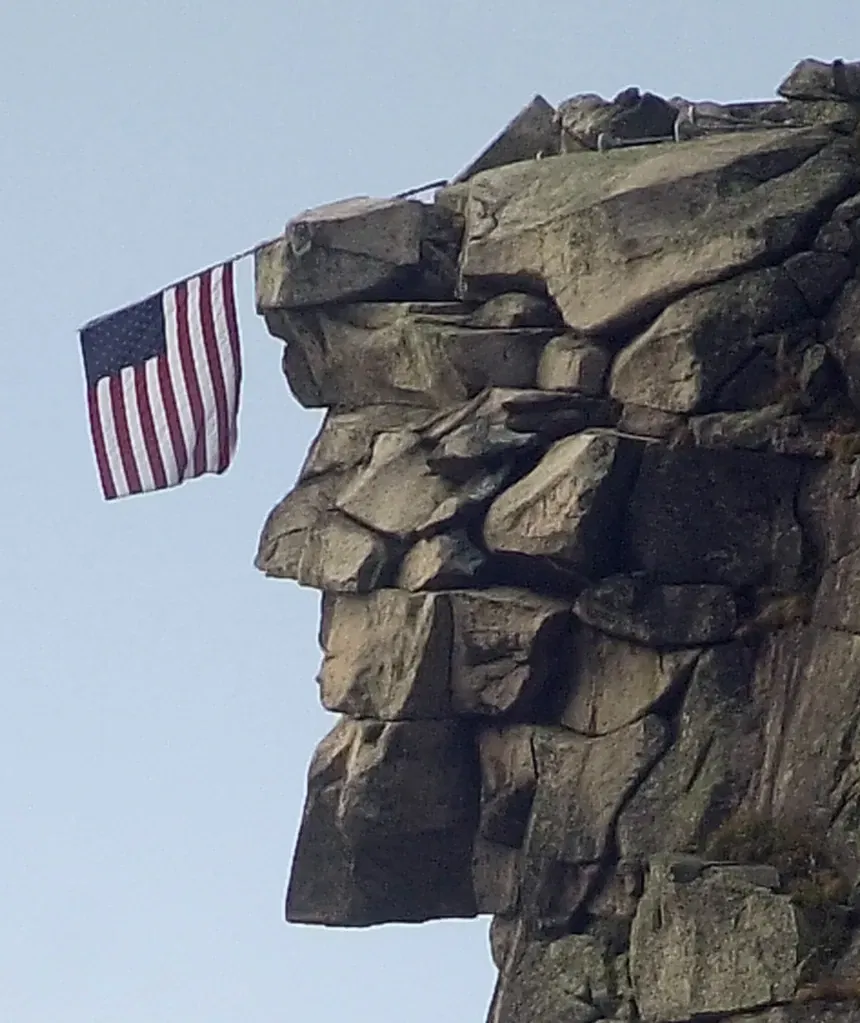

Old Man of the Mountain (New Hampshire, USA)
This cliffside rock formation looked uncannily like a human face and was a beloved symbol for the state of New Hampshire. Indigenous legends surrounded it, and modern locals tried for decades to stabilize it with cables and concrete. But in 2003, gravity and weather made the “face” crumble, leaving only a rocky memorial.

Slims River (Yukon, Canada)
In 2016, climate change pulled off one of the fastest natural disappearance acts ever. Fed by the Kaskawulsh Glacier, the Slims River suddenly dried up when meltwater rerouted into a different river system. In just days, the once-mighty waterway became a dusty riverbed, and nearby lake levels dropped dramatically.

Sycamore Gap tree (England, UK)
In September 2023, one of Britain’s most photographed trees met a senseless end. The Sycamore Gap tree, perched beside Hadrian’s Wall in Northumberland, had stood for centuries as a natural icon—so loved it even appeared on the big screen in Robin Hood: Prince of Thieves. Hikers, families, and travelers from across the world came to marvel at its striking silhouette.
That beauty was stolen overnight when the tree was illegally cut down, leaving only a stump where a piece of living history once stood. The act sparked anger and heartbreak across the country, with many calling it an attack on shared heritage.
The justice was delivered. Daniel Graham and Adam Carruthers were sentenced to more than four years in prison for their role in the destruction. Judge Edward Gurney described the act as “no more than drunken stupidity,” adding it was something these men would “regret for the rest of their lives.”